 Resource Hub
Thinking of a new plunge pool?
Plunge pools and small pools are booming across Australia. Here are the answers to the six questions people ask us most when planning one. Just scroll down and follow the pointers.

Is a plunge pool right for you?
Smaller blocks and closer living have made compact pools one of the most popular choices for new Australian homes and renovations. They’re quicker to heat, easier to cover and can double as a striking architectural feature.
- Cooling off on hot days and relaxing in the evening
- Entertaining, family time and supervising young swimmers
- Wellness, recovery and year-round use when heated
- Less suited to lap swimming, diving or big pool parties

Which type of plunge pool should I choose?
There’s no single best option — the right pool depends on your site access, ground conditions, design goals and budget. Concrete gives you the most design freedom, while fibreglass, precast and modular pools are generally faster to install.
Whatever you choose, Naked MINI can be fitted — it suits any plunge pool type and surface under 30,000 litres.

What does a plunge pool really cost?
The shell is only part of the price. Excavation, engineering, site access, electrical, plumbing, heating, filtration, water treatment, fencing, landscaping and approvals all add up — and they vary a lot from site to site.
Always ask for an itemised quote and compare exactly what each builder has included.

Which water system is best for a plunge pool?
In a small volume of water, what you put in matters even more. Salt and mineral pools still rely on chlorine as the main sanitiser. A Naked Freshwater System uses copper and silver ionisation with low-level oxidation, so your plunge pool runs on substantially less chlorine and salt.
The result is soft, gentle water with no strong chlorine smell — and less wear on equipment, surrounds and plants.


How much will it cost to heat and run?
A smaller volume heats faster and costs less to run than a full-size pool. Heat pumps are the most efficient option for holding temperature, gas heats quickly at a higher running cost, and solar depends on your sun and roof space.


How do I choose the right builder?
Look for plunge pool experience, verified licences and insurance, references, a detailed quote with clear provisional sums, and good after-sales support. Tell your builder early that you want a freshwater pool — they buy the Naked system direct from us and install it like any other sanitiser.
Not sure your builder knows freshwater? We’re happy to talk to them on your behalf.
Free Download
The Ultimate Plunge Pool Buyer’s Guide
Everything you need to plan, budget and build the perfect plunge pool – in one easy guide.

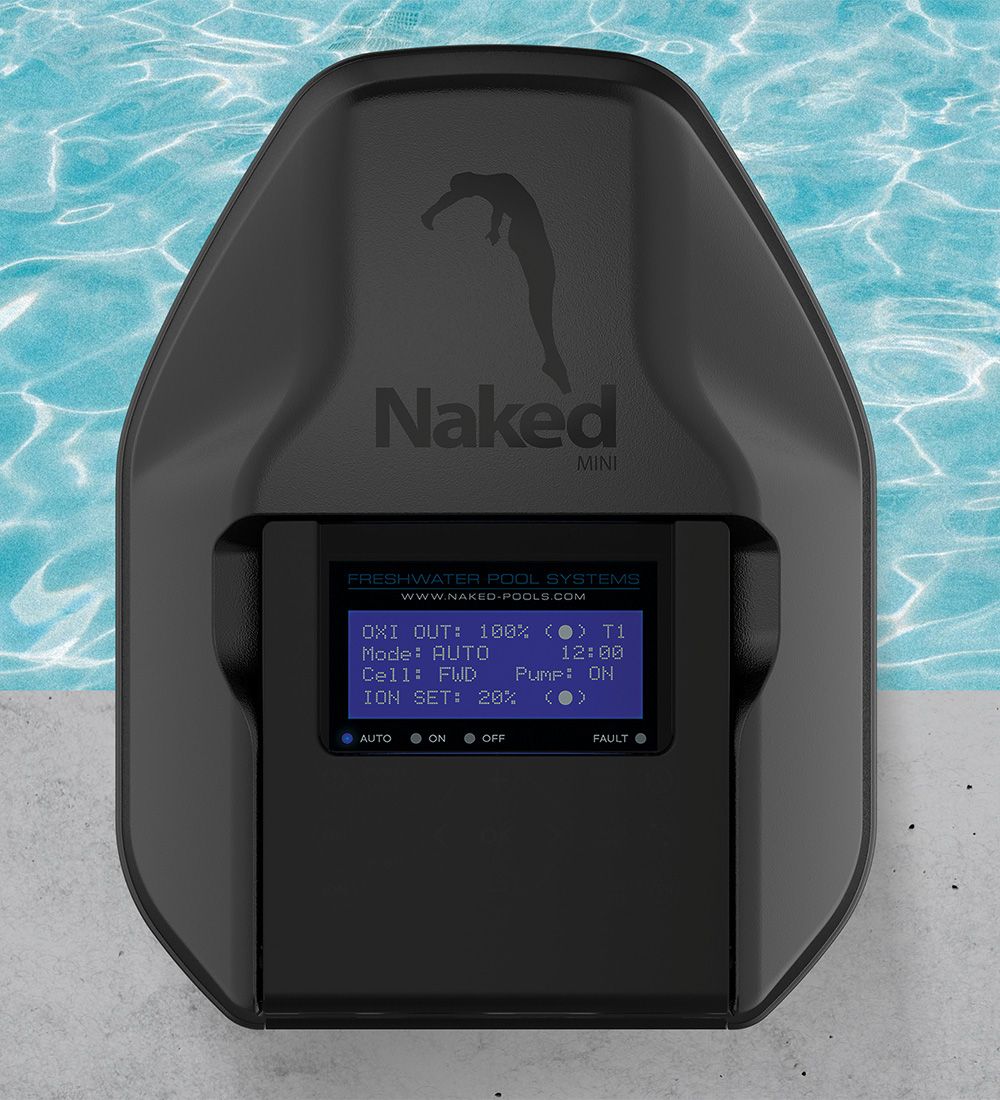
Australia’s favourite freshwater pool system, now for plunge pools
Meet Naked MINI
A premium plunge pool deserves water that’s beautifully clear, gentle and inviting. Naked MINI brings our freshwater technology to pools under 30,000 litres — which covers every plunge pool — combining copper and silver ionisation with low-level oxidation and advanced digital control.
“Less salt. Less chlorine. Beautifully clear freshwater.”
Supported from day one
What happens when your plunge pool’s finished?
Every Naked Freshwater System installed in Australia and New Zealand includes our Customer Care Plan, to make sure your system and pool are everything they should be.
Installation
Once your system is installed and registered in the Naked App, we:
- Make a first check-in call to introduce your new pool and system
- Follow up regularly during the first 12 months
Ongoing support
- Help you fully understand your pool setup
- The Naked App, online Help Centre and Customer Support Line
- Local freshwater specialists — pool shops and mobile technicians
Plunge pool FAQs
Does a Naked Freshwater System work in a plunge pool?
Yes. Naked MINI is purpose-designed for pools under 30,000 litres, which includes every plunge pool. It brings our full freshwater technology to compact pools.
Can I heat a freshwater plunge pool?
Yes — freshwater works with heat pumps, gas and solar heating. Let us know your target temperature so we can confirm the right setup.
Do I still need to test the water?
Yes. All pool water needs balancing. You’ll still check pH, alkalinity, calcium hardness and copper, but with far less chemical handling than a chlorine or salt pool.
Does my plunge pool need a fence?
Generally yes. Plunge pools carry the same barrier and safety obligations as larger pools. Rules vary between states, so check with your local council or builder.
Can I add freshwater to an existing plunge pool?
Yes — existing pools can be converted to freshwater. See converting your existing pool or talk to our team.
Ready to take the plunge?
Discover how Naked MINI can bring crystal-clear, low-chemical freshwater to your new plunge pool.
Get a Free Quote Talk to a specialist
Call 1800 625 331